
What Is a Sales Pipeline? Stages, Examples and Mistakes

Sarah Johnson
Writes about field sales, meeting notes and voice-first workflows at ParrotNotes. Every article is reviewed by the ParrotNotes product team before it goes live.
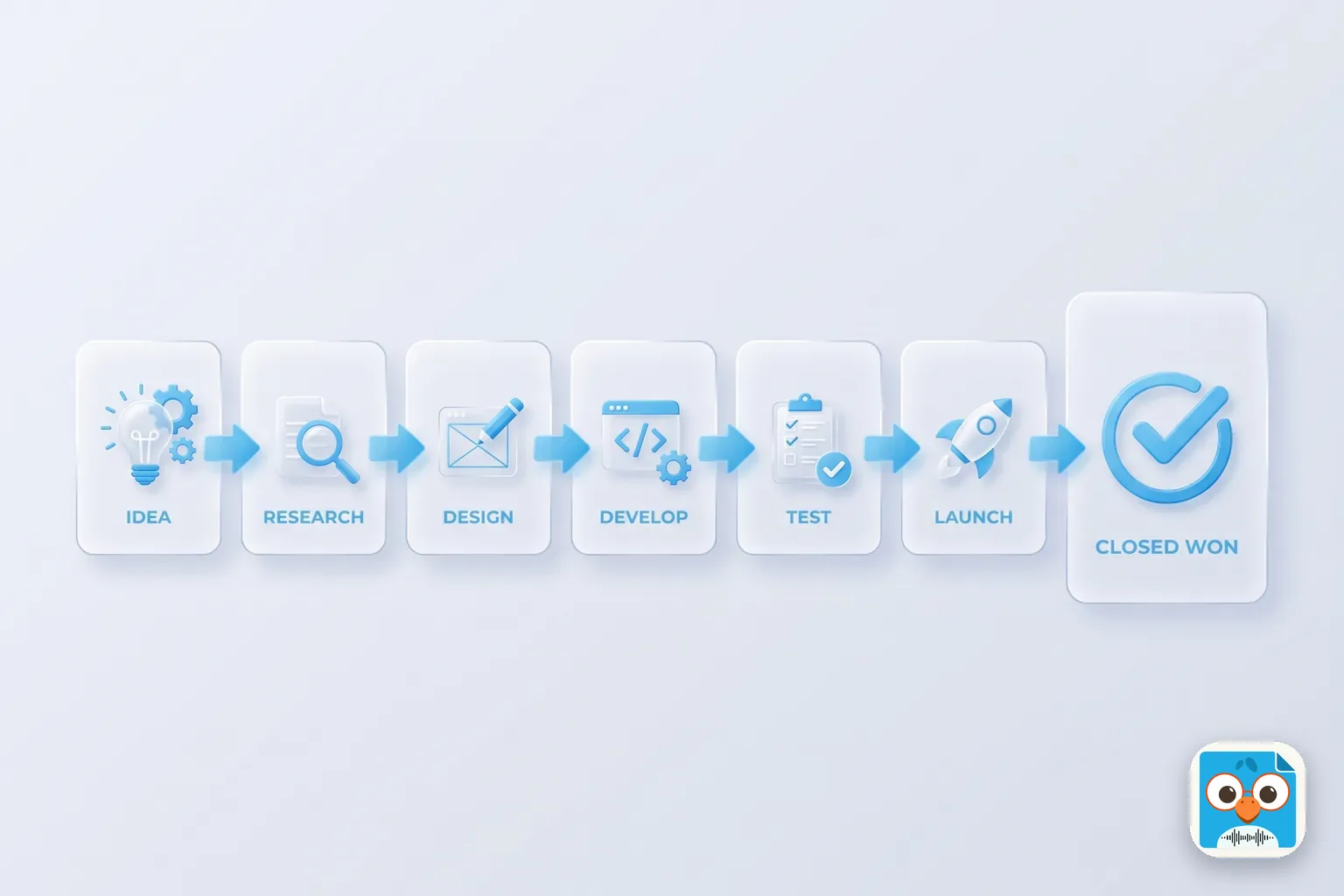
Table of Contents
- 1.What is a sales pipeline?
- 2.The seven sales pipeline stages, with exit criteria
- 3.A sales pipeline example: one field deal, stage by stage
- 4.Sales pipeline vs sales funnel vs sales forecast
- 5.Four numbers that describe a pipeline
- 6.Common sales pipeline mistakes
- 7.Where field pipeline evidence comes from
- 8.Conclusion
It's Monday morning, and Rachel's team pipeline shows $1.2 million. One deal, a $90,000 order at a regional hospital supplier, has sat at "Proposal" for six weeks. She asks the rep when he last spoke to the buyer. He checks his phone. Five weeks ago.
Rachel (an invented manager, but you've met her) doesn't have a pipeline problem. She has a definition problem. If you've ever asked what is a sales pipeline and got back a funnel diagram and a list of stage names, you know the gap. Drawing stages is easy. Agreeing what must be true before a deal moves, and keeping it true while reps are out in the field, is the hard part.
Below: a plain definition, seven stages with exit criteria written from the buyer's side, one field deal from first visit to signed order, how a pipeline differs from a funnel and a forecast, and the mistakes that quietly inflate it.
A pipeline is only as good as the notes behind it. If your reps would rather talk than type after a visit, ParrotNotes turns a two-minute spoken debrief into a summary and action items.
What is a sales pipeline?
A sales pipeline is the list of open deals a team is working, each placed at a stage of the sales process, with a value, an expected close date, and a next step. It shows where every opportunity stands, what has to happen next, and which deals are stuck, so reps know what to do and managers know what's real.
Salesforce calls it "a visual representation of where each prospect is in the sales process", and IBM says almost the same. The visual part is the board in your CRM. The useful part is three fields on every deal:
- Stage: how far the buyer has actually moved
- Value and close date: what it's worth and when it should land
- Next step with a date: the specific thing that happens next, and when
A deal missing any of the three isn't in the pipeline. It's on a wish list.
The seven sales pipeline stages, with exit criteria
Most sources list six or seven stages with similar names. Salesforce runs from prospecting to post-purchase, LinkedIn's version ends with retention, and IBM stops at closing.
The names matter less than the exit criteria. A stage should describe what the buyer has done, not what the rep has done. "Quote sent" tells you the rep hit send. "Buyer reviewed the quote and named who else signs" tells you the deal moved. Here's a version for field teams; copy it and adjust the wording.
| Stage | What's true of the buyer | Exit evidence before moving it on |
|---|---|---|
| 1. Prospect | A named person at an account that fits your customer profile | They agreed to talk about a specific problem |
| 2. Qualified | The buyer confirmed a problem worth solving and rough timing | The problem is written in the buyer's words; next meeting booked |
| 3. Discovery done | Pain, impact, stakeholders, and decision process are known | The person who signs is named; there's a decision date |
| 4. Solution fit | The buyer agrees your approach solves it (demo, trial, or site visit) | The buyer asked for a price, or confirmed fit in writing |
| 5. Proposal | The buyer has scope and price in hand | They've reviewed it, named every approver, and set a date to answer |
| 6. Negotiation | Terms and paperwork are being settled | Verbal yes from the decision-maker; path to signature mapped |
| 7. Closed | The order is signed, or the deal is lost | Signed paperwork, or a lost reason in the buyer's words |
Discovery and negotiation do the most damage when they're loose. For discovery, our discovery questions guide covers what to ask, and MEDDPICC maps neatly onto stages 2 to 4. For negotiation, a mutual action plan shows both sides who signs and how.
A sales pipeline example: one field deal, stage by stage
Definitions stick better with a deal attached. This one is invented, but it runs the way field deals do.
Leah is an outside rep for a packaging equipment distributor in Ohio. On a service call at Brookfield Foods, a regional food distributor, she notices the night shift wrapping pallets by hand. Here's how that became a signed order.
| Date | Stage | The note that justified the move | Value and close date |
|---|---|---|---|
| Mar 3 | Prospect | "Tom Reyes, ops manager. Night shift hand-wraps about 300 pallets. Open to a call." | Not set |
| Mar 10 | Qualified | "Two hand-wrapped loads failed in transit last quarter. Budget opens in Q2. Site visit Mar 24." | Not set |
| Mar 24 | Discovery done | "Met Anita Shah, warehouse director, who signs. Capital committee meets May 14." | $48,000, May 31 |
| Apr 8 | Solution fit | "Demo machine ran a full shift. Anita asked for a quote with install." | $48,000, May 31 |
| Apr 15 | Proposal | "Quote sent for two machines. Anita reviews with the CFO; answer by Apr 29." | $48,000, May 31 |
| May 2 | Negotiation | "CFO wants a service plan included. Anita says yes if we can." | $48,000, May 31 |
| May 9 | Back to Proposal | "CFO wants a lease-versus-buy comparison and a second quote. Committee moved to June 11." | $48,000, June 30 |
| June 18 | Closed won | "Approved June 11. Purchase order signed, first-year service included." | $48,000, closed |
Look at May 9. Nothing was lost, but the exit evidence for negotiation was: the decision-maker's yes had turned back into an open evaluation. So Leah moved the deal back a stage and pushed the close date a month.
That honest edit is the whole point. Left at "Negotiation, May 31," her manager would have counted $48,000 for May, and May would have missed. And every note is specific: names, numbers, dates, the buyer's own reason. Not "great meeting, very interested."
Sales pipeline vs sales funnel vs sales forecast
These three get used as if they were one thing. They answer different questions.
| Sales pipeline | Sales funnel | Sales forecast | |
|---|---|---|---|
| Question it answers | Where does each deal stand, and what's next? | How many buyers move from awareness to purchase? | How much revenue closes this period? |
| Unit | Individual deals | Groups of leads, conversion rates | One number per month or quarter |
| Example | "Brookfield is at Proposal, answer due Apr 29" | "12% of trade-show leads became opportunities" | "We'll close $410,000 in May" |
Salesforce frames it as the seller's view (pipeline) against the buyer's view (funnel). LinkedIn adds that a forecast "estimates how much revenue a business can potentially bring in." Because the forecast is built from the pipeline, a loose pipeline makes a bad forecast; the method is in our guide on how to improve sales forecast accuracy.
Four numbers that describe a pipeline
Pipeline value is the sum of open deals. On its own it flatters everyone, since a deal at Prospect counts the same as one at Negotiation.
Coverage is pipeline value divided by quota. Many B2B teams aim for three to four times, a rule of thumb ZoomInfo cites, but your win rate is the better guide.
Stage conversion is the share of deals moving from each stage to the next. A drop after Proposal often means discovery never found the person who signs.
Deal age is how long a deal has sat in its stage. At twice your normal time, treat it as stalled.
None of these beats the notes underneath. Try ParrotNotes free: every recording gets an AI summary, and 100 free minutes a month covers plenty of two-minute debriefs.
Common sales pipeline mistakes
Dev manages eight reps selling building supplies to contractors. Half his pipeline sat in a stage called "Demo scheduled," because booking a demo was easy and the stage rewarded it. He renamed it "Buyer confirmed fit," with the exit rule above, and many of those deals dropped back to Qualified that week. The pipeline shrank. His forecast calls got shorter.
That's the first mistake. The full list:
- Stages named after seller activity. "Called" and "Quote sent" measure effort. Name stages after what the buyer did.
- No written exit criteria. Without them, "Qualified" means one thing to your best rep and another to your newest.
- Next steps without dates. "Follow up" isn't a next step. "Anita answers by Apr 29" is.
- Close dates that move quietly. A date pushed three times with no note explaining why is the warning sign.
- Deals that never die. A deal untouched for 60 days inflates coverage. Close it as lost and record why.
- Stages that never go backward. Leah's May 9 edit feels like failure. It's accuracy.
- Updates written from memory, days later. Friday's CRM entry for Tuesday's visits produces "good meeting" notes. Salesforce's State of Sales 2026, a survey of 4,050 sales professionals, found 79% of high performers prioritize data hygiene, against 54% of underperformers.
The first two are definition fixes for this week. The rest are habits, built through your field sales management cadence, a 15-minute pipeline stand-up, and a quarterly sales QBR.
Where field pipeline evidence comes from
For a field team, the evidence is said out loud in a warehouse or a site office, and it's gone by the next visit unless someone captures it. The fix is a spoken debrief after every meaningful visit, before the rep drives off:
- Who was there, and did we meet anyone new who signs?
- What did they say, in their words, about problem, budget, or timing?
- What changed against this stage's exit criteria? Forward, or back?
- What's the next step, who owns it, and by when?
Leah's notes above are exactly that, trimmed. Two minutes of talking gives a manager a record they can read in 30 seconds.
Conclusion
So, what is a sales pipeline? It's your open deals, each at a stage that describes what the buyer has done, each with a value, a close date, and a dated next step. Write the stage definitions down, let deals move backward when the evidence says so, and treat the notes behind each move as the real asset.
Rachel's six-week "Proposal" deal wasn't a lazy rep. It was a stage with no exit rule and a visit with no record. Download ParrotNotes free, give your reps the four debrief prompts, and let the next pipeline call run on what buyers actually said.
Frequently Asked Questions
What is a sales pipeline in simple terms?
It's a list of every deal your team is working, sorted by how far each buyer has moved toward buying. Each deal has a stage, a value, a close date, and a dated next step. Reps use it to decide what to do next; managers use it to see which deals are real.
How many stages should a sales pipeline have?
Most B2B teams use five to seven stages between first contact and a closed deal. Fewer hides where deals stall; many more turns updates into admin. The count matters less than a written exit rule for each stage, based on what the buyer has done.
What is the difference between a sales pipeline and a sales funnel?
A pipeline tracks individual deals through the seller's process: where each stands and what happens next. A funnel measures groups of buyers moving from awareness to purchase, and the conversion rate between steps. Managers work the pipeline deal by deal; marketing uses the funnel to find drop-off.
What is a good pipeline coverage ratio?
A common rule of thumb is three to four times quota for the period, but your win rate is the better guide. If your team wins one deal in four, you need at least four times coverage. And an inflated pipeline makes any ratio look healthier than it is.
How often should a sales pipeline be updated?
Update a deal the same day something changes it: a meeting, a new stakeholder, a price conversation, or a slipped date. For field teams, that means a short debrief after every visit rather than a weekly catch-up. A pipeline updated from memory drifts toward optimism.
Related Posts
Windshield Time: Turn Drive Time Into Done Admin
Windshield time eats a field rep's day. Audit one week, keep the drive for driving, and try a two-minute parked debrief to clear your admin between stops.
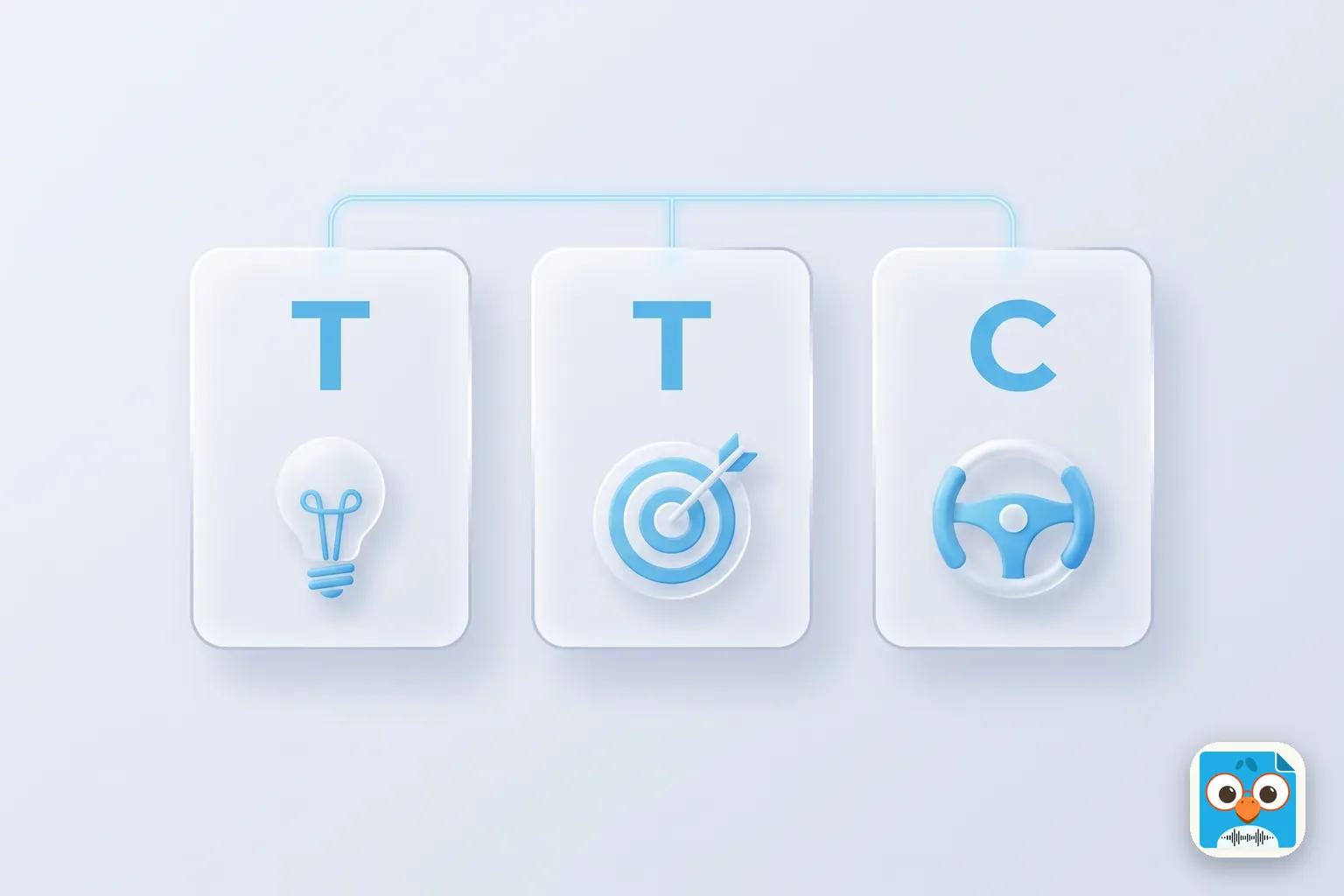
The Challenger Sale: Summary and How to Apply It in the Field
The Challenger Sale in plain English: the five seller profiles, teach, tailor, and take control, plus a six-step pitch and call sheet for your next visit.
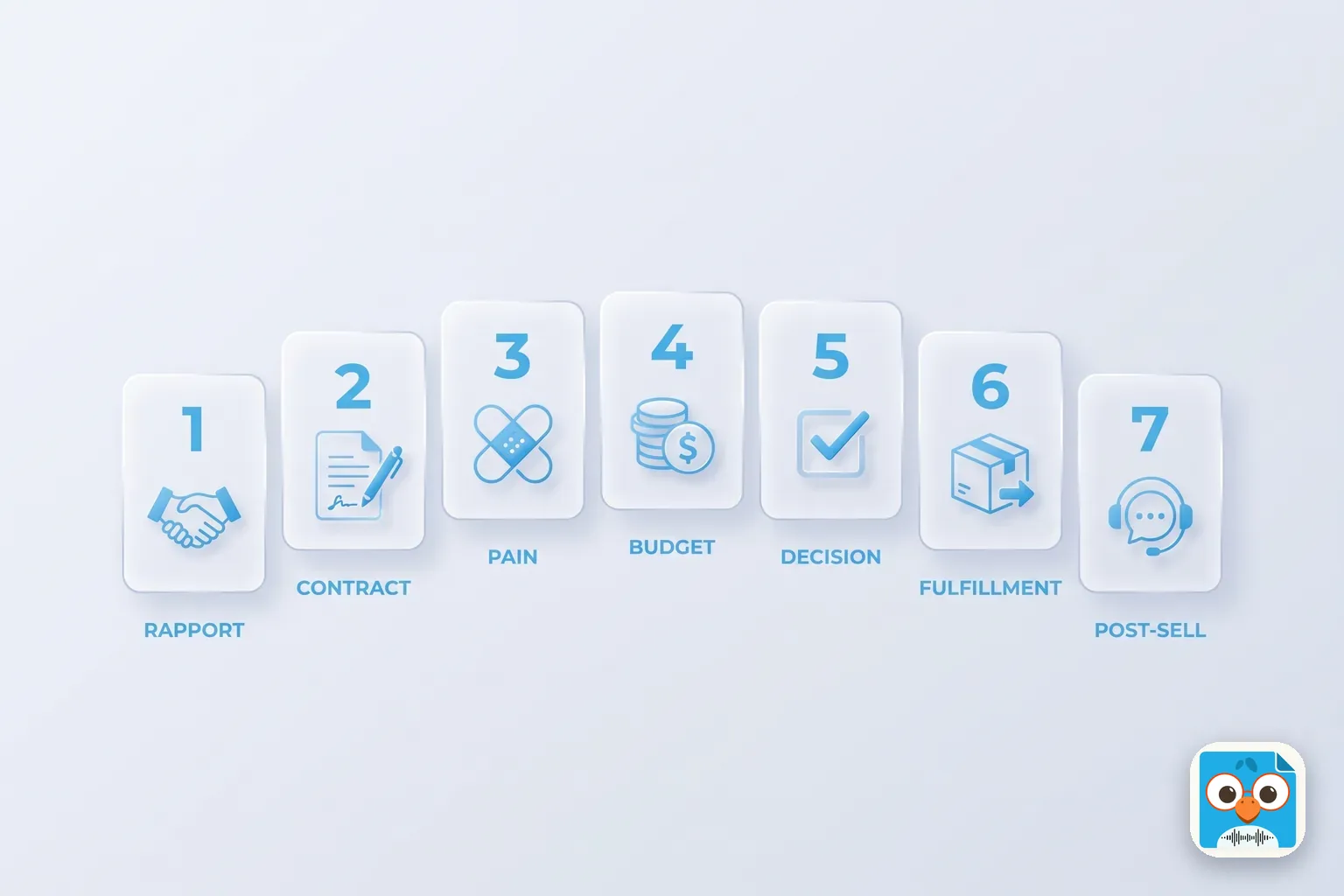
Sandler Sales Methodology: The Seven Steps Explained
The Sandler sales methodology in seven steps, from up-front contract to post-sell, with a one-page call sheet and a worked field call to copy. Try it free.