
Mutual Action Plan: Template and Examples

Sarah Johnson
Writes about field sales, meeting notes and voice-first workflows at ParrotNotes. Every article is reviewed by the ParrotNotes product team before it goes live.
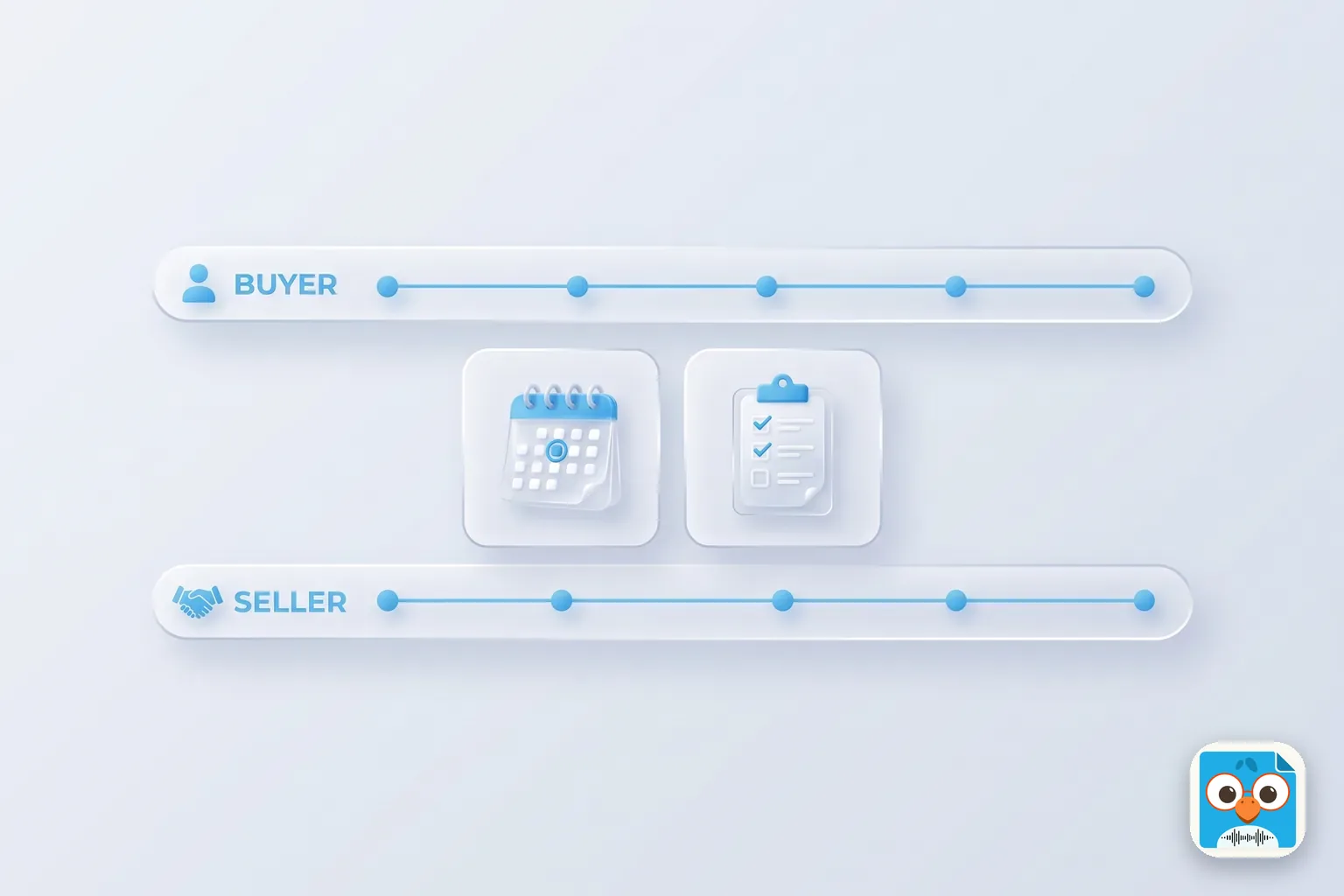
Table of Contents
- 1.What a mutual action plan is (and what it isn't)
- 2.Why buyers need a mutual action plan more than you do
- 3.The mutual action plan template
- 4.Mutual action plan example: one deal, before and after a meeting
- 5.How to introduce a mutual action plan without sounding pushy
- 6.Keep the plan current: five questions after every meeting
- 7.Warning signs your mutual action plan is fiction
- 8.Conclusion
Marco had the verbal yes on a Tuesday. The operations director shook his hand across the conference table and said, "Send the paperwork, we're ready." Marco put the deal in commit for the month.
Then procurement asked for a vendor form. IT wanted a security review. Legal had a three-week queue.
Nobody had lied to Marco. They just hadn't mentioned the steps, because he'd never asked. The deal signed six weeks later, in the next quarter.
A mutual action plan is how you ask. It's a short shared document, built with the buyer, that lists every step between today and the buyer getting value, with an owner and a date on each. Below: a one-page template, a filled-in example on one deal, the words to introduce it, and a routine that keeps it true after every meeting.
What a mutual action plan is (and what it isn't)
Smartsheet defines the template as "a preformatted document for creating a shared plan of action between a sales team and prospective buyer," and lists the other names you'll hear: mutual close plan, mutual success plan, or sales close plan.
Three things separate a real mutual action plan from paperwork with a new name:
- It's shared. The buyer can see it, edit it, and forward it. If only your team can open it, it's a close plan.
- Both sides own steps. A plan where every row says "Seller" is your to-do list. The buyer's rows are the point.
- It ends at the buyer's outcome. Salesloft's advice is to make the last milestone about the buyer getting value, such as a go-live review, not contract signing.
An internal close plan for things like discount approvals is fine. Just don't hand it to the buyer and call it mutual.
Want your plan-review meetings captured while you keep eye contact? Download ParrotNotes free and let your phone take the notes.
Why buyers need a mutual action plan more than you do
Treat the plan as a service to the buyer, not a forecasting tool. Buying groups struggle to buy.
Gartner surveyed 632 B2B buyers in 2024. In its May 2025 release, Gartner's Delainey Kirkwood described buying groups as "ranging from five to 16 people across as many as four functions," and 74% of buyer teams showed "unhealthy conflict" during the decision. Groups that reached consensus were 2.5 times more likely to report a high-quality deal.
That conflict rarely looks like a loss to a competitor. Matt Dixon and Ted McKenna analyzed 2.5 million recorded sales conversations for The JOLT Effect and found that 40-60% of lost deals ended in no decision.
A plan won't cure indecision. It puts the steps, owners, and dates on one page, so the buying group can see its own process, often for the first time.
The mutual action plan template
Copy this into a shared doc or sheet: a header that fits on a phone screen, then a milestone table.
Part 1: the header
MUTUAL ACTION PLAN: [Buyer company] and [Your company]

Why we're doing this (buyer's words, 1-2 sentences):
Success looks like (a measurable result and a date):
Go-live date the buyer needs:           Why that date:
Buyer lead:                             Seller lead:
Decision-maker who signs:               Met them? Y / N
Last updated:                           Next plan review:
The "why that date" line matters most. A go-live date with a business reason holds. A date with no reason slides.
Part 2: the milestone table
| Milestone | Buyer owner | Seller owner | Due | Status |
|---|---|---|---|---|
| Agree on the problem and success measure | ||||
| Confirm who's involved in the decision | ||||
| Proof step (pilot, demo on real data, references) | ||||
| Business case to budget owner | ||||
| Security and IT review | ||||
| Procurement: vendor setup | ||||
| Legal: contract redlines | ||||
| Signature | ||||
| Rollout | ||||
| 30-day value review |
Status gets three words only: Done, On track, At risk.
Fill in the dates backward. Start at the go-live date and ask the buyer how long each step takes on their side. Buyers underestimate legal and procurement, so ask directly: "When you bought your last system, how long did the contract take?" If the dates don't fit, you've learned that in week two instead of week ten.
Keep it to 10 rows or fewer. If your champion can't forward it without an apology, it's too long.
Mutual action plan example: one deal, before and after a meeting
This deal is invented for illustration: the rep, the companies, and the people don't exist.
Lena sells route-planning software to Hartwell Foods, a regional distributor with 40 delivery trucks. The operations director, Sam Ortiz, wants new routes live by March 2, the spring customer changeover, when every route gets redrawn anyway. Success means lower overtime hours in the first full month, measured from payroll.
Version 1: after discovery (January 8)
| Milestone | Buyer owner | Seller owner | Due |
|---|---|---|---|
| Agree on problem and measure | Sam Ortiz | Lena | Jan 8 (done) |
| Two-week pilot on four routes | Dispatch lead | Lena | Jan 24 |
| Business case to CFO | Sam Ortiz | Lena | Jan 30 |
| Contract signed | Sam Ortiz | Lena | Feb 6 |
| Rollout to all 40 trucks | Dispatch lead | Onboarding team | Mar 2 |
Tidy, and missing half the buying group.
Version 2: after the plan review (January 27)
In the review, Lena walked through the plan and asked, "Who else has to touch this before March 2?" Sam named two people Lena had never met: an IT manager who reviews anything connected to the truck telematics, and a purchasing coordinator who needs a vendor packet and three quotes on file.
| Milestone | Buyer owner | Seller owner | Due | Status |
|---|---|---|---|---|
| Agree on problem and measure | Sam Ortiz | Lena | Jan 8 | Done |
| Pilot on four routes | Dispatch lead | Lena | Jan 24 | Done |
| IT review of telematics link | IT manager | Solutions engineer | Feb 3 | At risk |
| Business case to CFO | Sam Ortiz | Lena | Feb 4 | On track |
| Vendor packet and quotes | Purchasing | Lena | Feb 6 | On track |
| Contract redlines | Buyer's counsel | Lena's legal team | Feb 13 | On track |
| Contract signed | CFO | Lena | Feb 16 | On track |
| Driver training | Dispatch lead | Onboarding team | Feb 25 | On track |
| Rollout to all 40 trucks | Dispatch lead | Onboarding team | Mar 2 | On track |
| 30-day overtime review | Sam Ortiz | Lena | Apr 3 | On track |
Three things changed. The signature moved 10 days, and Lena knows it in January. The signer is now the CFO, not Sam.
And the IT review is at risk because IT hasn't seen anything, so Lena's next move is obvious: get her solutions engineer in front of IT this week. For the people side, pair the plan with a stakeholder map.
How to introduce a mutual action plan without sounding pushy
Don't open discovery with a plan; it feels like paperwork before value. Bring it up when the buyer agrees the problem is real, more than one person has to say yes, and there's a date that matters to them. Then frame it around their date, not your quarter:
- The opener: "You said the routes need to be live by March 2. Want to work backward from that together, so nothing surprises either of us?"
- If they hesitate: "It's one page. Most of it is steps on your side I don't know yet, like how purchasing works here."
- The missing-step question: "When you bought your last software, what happened between 'we like it' and the first login?"
- Closing the meeting: "I'll send the updated plan tonight. Can we review it together on the 27th for 15 minutes?"
Call it whatever fits; "rollout timeline" often lands better with operations people. If the buyer won't put a single name or date on it, that's evidence: the problem isn't urgent, your contact can't speak for the group, or nobody knows the process. Those gaps map to the decision process and paper process in MEDDPICC.
Keep the plan current: five questions after every meeting
Most plans die the same way: the buyer answers questions over three meetings, and nobody updates the page.
Dev, a rep selling packaging equipment, updated his plan from memory before forecast calls. On a plant visit, the buyer mentioned that the capital committee met only on the first Monday of the month. Dev's plan still showed a mid-month signature, and he found out when the date slipped past.
The fix is a routine. After every buyer meeting, answer five questions before you drive away:
- Did any date move? Note the old date, new date, and reason.
- Did an owner change, or a new name come up?
- What proof does the buyer still need, and who asked?
- What risk did someone name, in their exact words?
- What do I send in the next 24 hours?
With the buyer's permission, record the plan review in ParrotNotes: every recording gets a transcript and an AI summary, and AI action items pull out the "who does what by when" lines for your table. Pro adds speaker identification and sales frameworks like MEDDIC, SPIN, and BANT. Then turn question five into a recap using our follow-up email templates.
Warning signs your mutual action plan is fiction
Check before you forecast off the plan:
- Every buyer row has the same owner. You probably haven't met anyone else.
- No row has ever slipped. Real plans move.
- Legal and procurement have guessed dates, or none.
- The last row is "Contract signed." Add rollout and a value review, or the buyer has no reason to care.
If two are true, the close date is a hope. See improving sales forecast accuracy for turning this evidence into forecast categories, and enterprise sales for tracking many stakeholders.
Want every plan review captured without typing in front of the buyer? Try ParrotNotes free: 100 recording minutes a month, a summary on every recording, and five AI-powered recordings for action items.
Conclusion
A mutual action plan is the buyer's decision process on one page. Build it backward from a date they care about, put a buyer owner on every buyer step, and end it at their result, not your signature.
Then keep it true: answer the five questions before you leave the parking lot. Do that, and the week your buyer says "we're ready" is the week they sign.
To capture every date, owner, and risk from your next plan review, download ParrotNotes free.
Frequently Asked Questions
What is a mutual action plan in sales?
A mutual action plan is a shared document a seller and buyer build together. It lists every step between today and the buyer getting value, from proof and business case through legal, signature, and rollout, with an owner on each side and a due date. It's also called a mutual close plan.
Is a mutual action plan the same as a close plan?
They overlap, but no. A close plan is usually internal and aims at a signature. A mutual action plan is shared with the buyer, names their owners, and ends at the buyer's outcome, such as a 30-day value review, rather than at the contract.
When should you introduce a mutual action plan?
Once the buyer agrees there's a real problem, more than one person has to approve, and there's a date that matters to them. For most B2B deals that's after discovery and before a pilot or proposal. Anchor it to their go-live date and work backward together.
What should a mutual action plan template include?
A header with the buyer's reason in their own words, a measurable outcome, the go-live date and why it matters, and a lead on each side. Then a milestone table (step, buyer owner, seller owner, due date, status) that runs through procurement, legal, rollout, and a value review.
What if the buyer won't fill in the plan?
Treat it as information, not rejection. A buyer who won't name owners or dates is telling you the problem isn't urgent, your contact can't speak for the group, or nobody knows the process. Ask one smaller question, such as "Who would own the contract review?"
Related Posts
Windshield Time: Turn Drive Time Into Done Admin
Windshield time eats a field rep's day. Audit one week, keep the drive for driving, and try a two-minute parked debrief to clear your admin between stops.
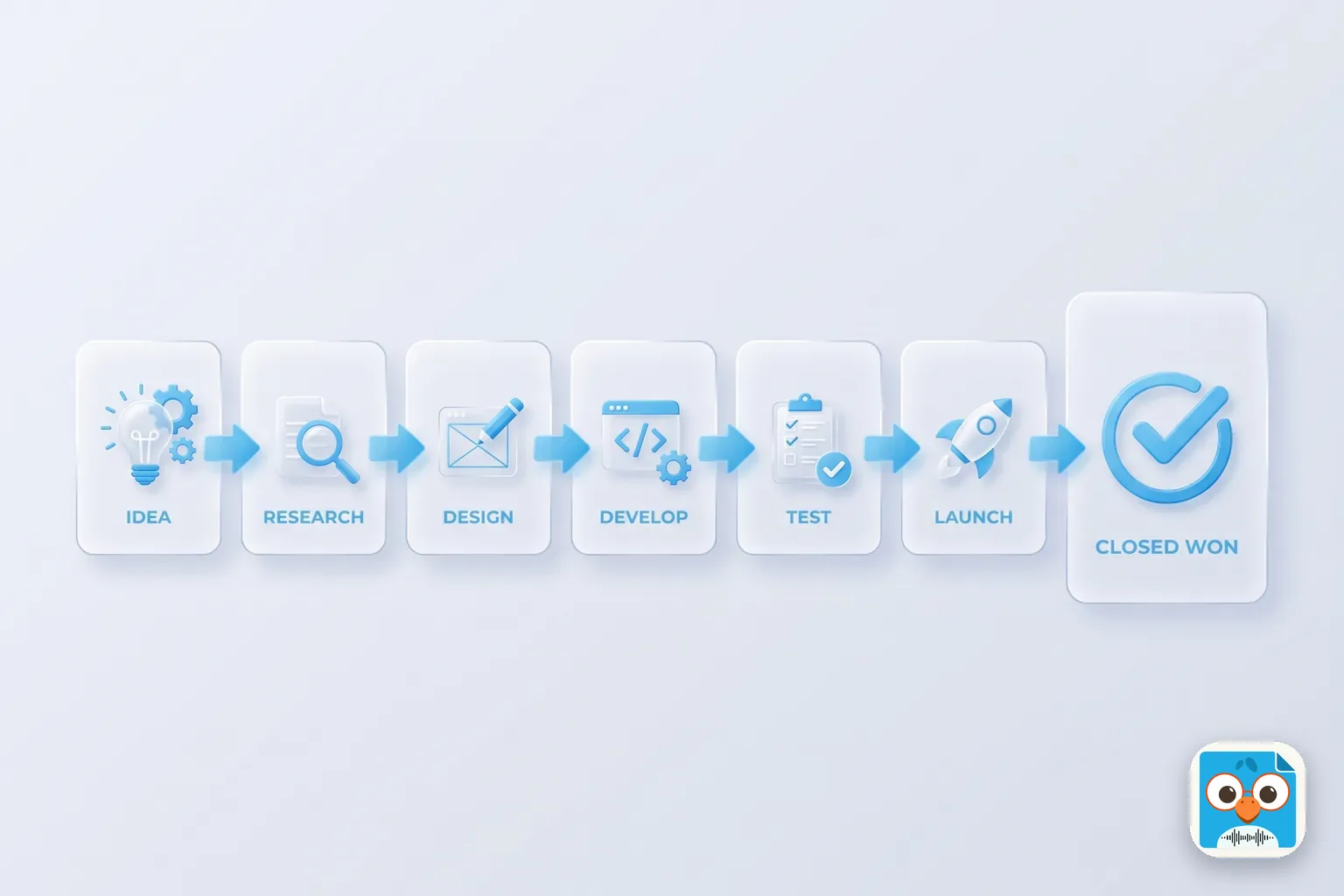
What Is a Sales Pipeline? Stages, Examples and Mistakes
What is a sales pipeline? Learn the seven stages with exit criteria, follow one field deal from prospect to close, and avoid the mistakes that inflate it.
The Challenger Sale: Summary and How to Apply It in the Field
The Challenger Sale in plain English: the five seller profiles, teach, tailor, and take control, plus a six-step pitch and call sheet for your next visit.