
The Challenger Sale: Summary and How to Apply It in the Field

Sarah Johnson
Writes about field sales, meeting notes and voice-first workflows at ParrotNotes. Every article is reviewed by the ParrotNotes product team before it goes live.
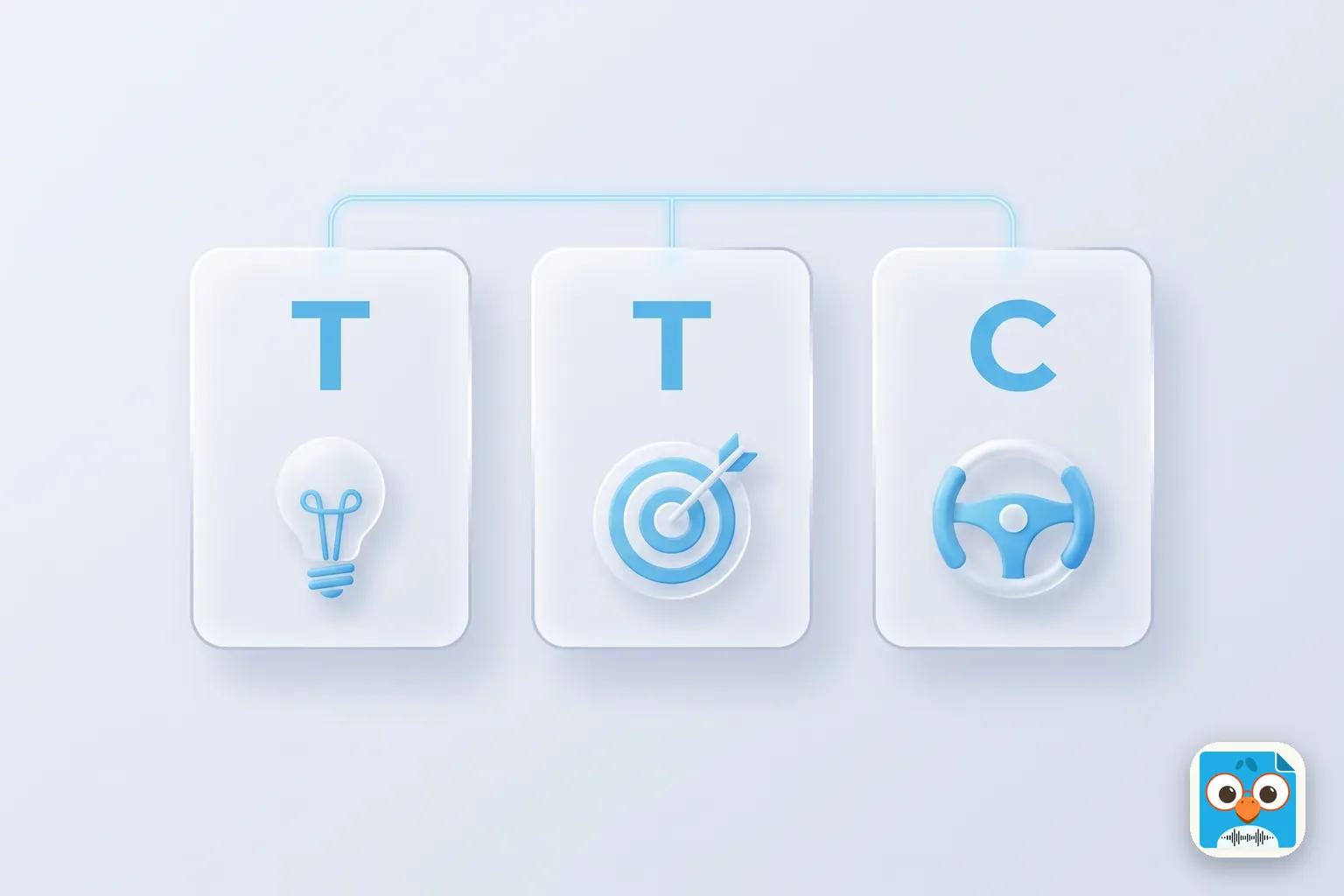
Table of Contents
- 1.The Challenger Sale in two minutes
- 2.The five seller profiles in The Challenger Sale
- 3.Teach, tailor, take control: the Challenger sales methodology
- 4.Commercial teaching: the six-step pitch, worked on a real visit
- 5.A Challenger call sheet for field reps
- 6.Where the Challenger Sale fits, and where it doesn't
- 7.Conclusion
"We're happy with our supplier." Marco hears it in the first five minutes of every plant visit. He sells a vendor-managed stocking program for maintenance parts, and for two years he answered that line the way most reps do: a friendly nod, a price sheet, and a promise to check back next quarter.
Then his manager handed him a copy of The Challenger Sale. The book's argument is blunt. In complex B2B deals, being liked isn't what separates the top reps. Teaching the buyer something they didn't know about their own business is.
You've heard the shorthand: teach, tailor, take control. What most summaries skip is how that works with a plant manager, a hard hat, and 30 minutes. This guide covers what the book found, the five seller profiles, the three skills, and the six-step teaching pitch, walked through Marco's next visit, then a call sheet for your own.
To keep your eyes on the buyer instead of a notepad, try ParrotNotes free and get the summary and action items when you're back in the car.
The Challenger Sale in two minutes
The Challenger Sale: Taking Control of the Customer Conversation was written by Matthew Dixon and Brent Adamson and published by Portfolio/Penguin on November 10, 2011. With colleagues at the Corporate Executive Board (CEB), they studied what separates high performers from everyone else.
The publisher's description says the research covered "thousands of sales reps across multiple industries and geographies." Its three headline findings:
- Every rep fits one of five profiles. Only one, the Challenger, delivers consistently high performance.
- Relationship building alone is a losing approach for complex, large-scale B2B sales.
- What Challengers do can be taught. It's a set of skills, not a personality.
The five seller profiles in The Challenger Sale
Challenger Inc., the company that now owns the methodology, publishes the profile split from the original research on its methodology page. The shares below are of all reps studied.
| Profile | Share of reps | What they do well | Where they stall |
|---|---|---|---|
| Challenger | 27% | Teach, tailor, talk money | Tension that isn't read and adjusted |
| Hard Worker | 21% | Effort and persistence | Strategic thinking, pricing talks |
| Relationship Builder | 21% | Customer advocacy | Pressure and money conversations |
| Lone Wolf | 18% | Confidence, tenacity | Teamwork and process |
| Problem Solver | 14% | Methodical follow-through | Over-servicing, pricing talks |
The split of reps is even. The split of stars isn't. The methodology page says nearly 40% of high performers were Challengers; the profiles page puts it at nearly 54%, and says Relationship Builders are a smaller share of high performers than any other profile.
The Challenger Sale doesn't say relationships don't matter. It says a relationship without an insight doesn't move a complex deal. The good news: the profiles page calls Hard Workers "the easiest to coach into Challengers."
Teach, tailor, take control: the Challenger sales methodology
Challenger Inc. defines the three skills this way: teach is "delivering Commercial Insight that gives customers a new perspective," tailor is "adapting the message to the priorities of different stakeholders," and take control is "guiding the buying process, making clear recommendations, and helping customers move toward a decision."
Teach: bring an insight the buyer can't get from your website
A commercial insight is a new way of seeing the buyer's problem that leads, eventually, to something you do well. "Our parts are cheaper" isn't one. "Your biggest parts cost is the downtime when a $4 bearing is out of stock" might be.
The test: would the buyer say "I hadn't thought of it that way"? If they'd say "we know," you're confirming, not teaching.
Tailor: same insight, different pressure for each person
Each person in a buying group hears your insight through their own scorecard. Aisha, who sells commercial flooring, gave the same pitch about replacement cycles to a facilities manager and then a finance director. The facilities manager cared how many weekends the lobby would close. The finance director cared which budget year the spend would land in.
Same insight, two reasons to act, and she'd only taken notes on one. Her next visit had a column per stakeholder; the stakeholder mapping template is a good place to start yours.
Take control: lead the next step, including the money
Taking control means naming the hard part of the decision; the profiles page calls it "discussing money and commitments." In the field:
- "If you want this in place before the spring shutdown, purchasing needs the numbers this month. Can we get 20 minutes with them?"
- "You mentioned price twice. Let's weigh it against the downtime number, not your current parts invoice."
Constructive tension holds it together
Challenger Inc. defines constructive tension as "the productive discomfort that helps customers question the status quo and recognize the need to change." Its tension guide recommends open questions, real silence after a hard one, and easing off when the room tells you to.
Commercial teaching: the six-step pitch, worked on a real visit
Challenger Inc. lays out six steps in its article on selling to informed buyers: the Warmer, the Reframe, Rational Drowning, Emotional Impact, A New Way, and Your Solution. Notice that your product doesn't appear until step six.
Here's Marco's next visit, to a food packaging plant. It's an illustration, not a customer case; the numbers are the plant's own, gathered on his previous visit.
| Step | What it's for | What Marco says |
|---|---|---|
| 1. Warmer | Show you understand their world | "Plants running two shifts on older lines usually tell me the same thing: parts cost is watched, downtime cost isn't. Is that fair here?" |
| 2. Reframe | Introduce a problem they hadn't weighed | "What if your most expensive part isn't the motor on the shelf, but the $4 bearing that isn't?" |
| 3. Rational drowning | Back it with numbers | "Your maintenance log shows 11 stoppages last quarter waiting on a stock part. At the line rate you gave me, that's about nine hours of lost output." |
| 4. Emotional impact | Make it personal | "Walk me through the last one. Who got the call, and what did they have to tell the customer?" |
| 5. A new way | Describe the fix without your product | "Plants that solve this stop counting parts cost per item and start tracking stock-outs per month, with someone accountable for the shelf." |
| 6. Your solution | Show how you deliver the new way | "That's what our stocking program does. We own the shelf, we count it weekly, and you see the stock-outs number every month." |
Step four was the turning point. The plant manager described a Saturday call-in, a driver sent 90 minutes each way for a part, and an apology email to her largest customer. Marco wrote her words down exactly, and they became the first line of his proposal.
Rational drowning works because it uses the buyer's numbers, which nobody can wave away. And because step five comes first, your solution answers the buyer's own conclusion.
A Challenger call sheet for field reps
Frameworks fade between the training room and the parking lot. Fill in the top half of this sheet before the visit and the bottom half within an hour of leaving.
Before the visit
| Field | What to write |
|---|---|
| Insight | The reframe in one sentence |
| Evidence | The numbers you'll use, and where each one comes from |
| Who's in the room | Each person's role and what they're measured on |
| Tailored angle | The version of the insight each person will care about |
| The hard ask | The commitment you'll ask for: a meeting, a pilot, a stakeholder |
After the visit
| Field | What to write |
|---|---|
| Reaction to the reframe | Their words, exactly, not your summary |
| Emotional impact | The story they told you about the problem |
| Objections | What they pushed back on, and who pushed |
| Tension check | Where you pushed, and whether it helped or stalled |
| Next step | What was agreed, with a date and an owner |
"Their words, exactly" is the field reps skip and the one that matters most. The buyer's own description of the problem is your best material for the proposal, the follow-up email, and the next stakeholder meeting.
A recording makes it easy. With the buyer's OK, ParrotNotes records the visit on your phone, with no meeting bot, and gives you a transcript, an AI summary, action items, and a follow-up email draft. Pro adds speaker identification and custom insight templates, so the after-the-visit fields can become your own template. Download ParrotNotes free: the free plan includes 100 minutes of recording a month, with an AI summary on every recording.
Where the Challenger Sale fits, and where it doesn't
The Challenger Sale was written for complex, large-scale B2B deals, where the buyer's biggest risk is often doing nothing and a rep who makes the status quo feel unsafe earns the next meeting.
It fits less well in quick transactional sales. Ben, a distributor rep, ran a full reframe on a customer who only wanted delivery dates for the same pallet of fasteners they'd bought for six years. The buyer got impatient, and Ben left without the order. On a repeat order, the Challenger move is smaller: one observation about the account, offered at the end.
It also works alongside other methods:
- SPIN. SPIN selling draws the problem out through questions; Challenger brings a view of the problem into the room. Implication questions are a good test of whether your reframe landed.
- Sandler. The Sandler sales methodology sets an up-front contract for each meeting, which pairs well with taking control.
- Consultative selling. Consultative selling starts from the buyer's stated needs. Challenger will tell the buyer those needs are the wrong ones.
- MEDDPICC. Challenger runs the conversation; MEDDPICC tells you whether the deal is qualified.
The authors' follow-up book, The Challenger Customer, focuses on finding the right stakeholders to teach inside the buying group.
Conclusion
The Challenger Sale comes down to a few habits you can practice this week:
- Bring an insight the buyer doesn't already know.
- Tailor it to what each stakeholder is measured on.
- Take control of the next step, including money.
- Use the buyer's own numbers, and write their reaction down word for word.
Start with one account. Write the reframe on the call sheet, run the six steps on your next visit, and fill in the bottom half before you start the car.
When you're done typing notes in the parking lot, download ParrotNotes free and let your next Challenger conversation write its own summary.
Frequently Asked Questions
What is The Challenger Sale about?
The Challenger Sale, by Matthew Dixon and Brent Adamson (2011), sorts thousands of researched sales reps into five profiles. It argues that in complex B2B sales the Challenger outperforms the rest by teaching buyers something new, tailoring the message to each stakeholder, and taking control of the sale, and that average reps can learn those skills.
What are the five seller profiles in The Challenger Sale?
The Challenger, the Hard Worker, the Relationship Builder, the Lone Wolf, and the Problem Solver. According to Challenger Inc., Challengers were the largest group in the original research at 27% of reps, and a far larger share of high performers: nearly 40% on its methodology page, nearly 54% on its profiles page.
Is the Challenger sales methodology aggressive?
Done well, no. The goal is constructive tension, which Challenger Inc. describes as productive discomfort that helps the buyer question the status quo. That means an insight backed by evidence, explored with open questions, and eased off when the buyer stops thinking and starts defending.
Does The Challenger Sale still work in 2026?
Yes. Buyers do much of their research before they meet a rep, so a rep who repeats the website adds nothing, while one who brings a new view of the buyer's problem, backed by the buyer's own numbers, still earns the meeting. What changes is the evidence: use current, sourced data, not statistics from 2011.
How do I take notes on a Challenger sales call?
Before the visit, write your reframe, your evidence and its sources, and the angle for each stakeholder. Afterward, capture the buyer's reaction in their own words, the story they told about the problem, objections and who raised them, and the next step with a date. A transcript makes the "their words" part easy to get right.
Related Posts
Windshield Time: Turn Drive Time Into Done Admin
Windshield time eats a field rep's day. Audit one week, keep the drive for driving, and try a two-minute parked debrief to clear your admin between stops.
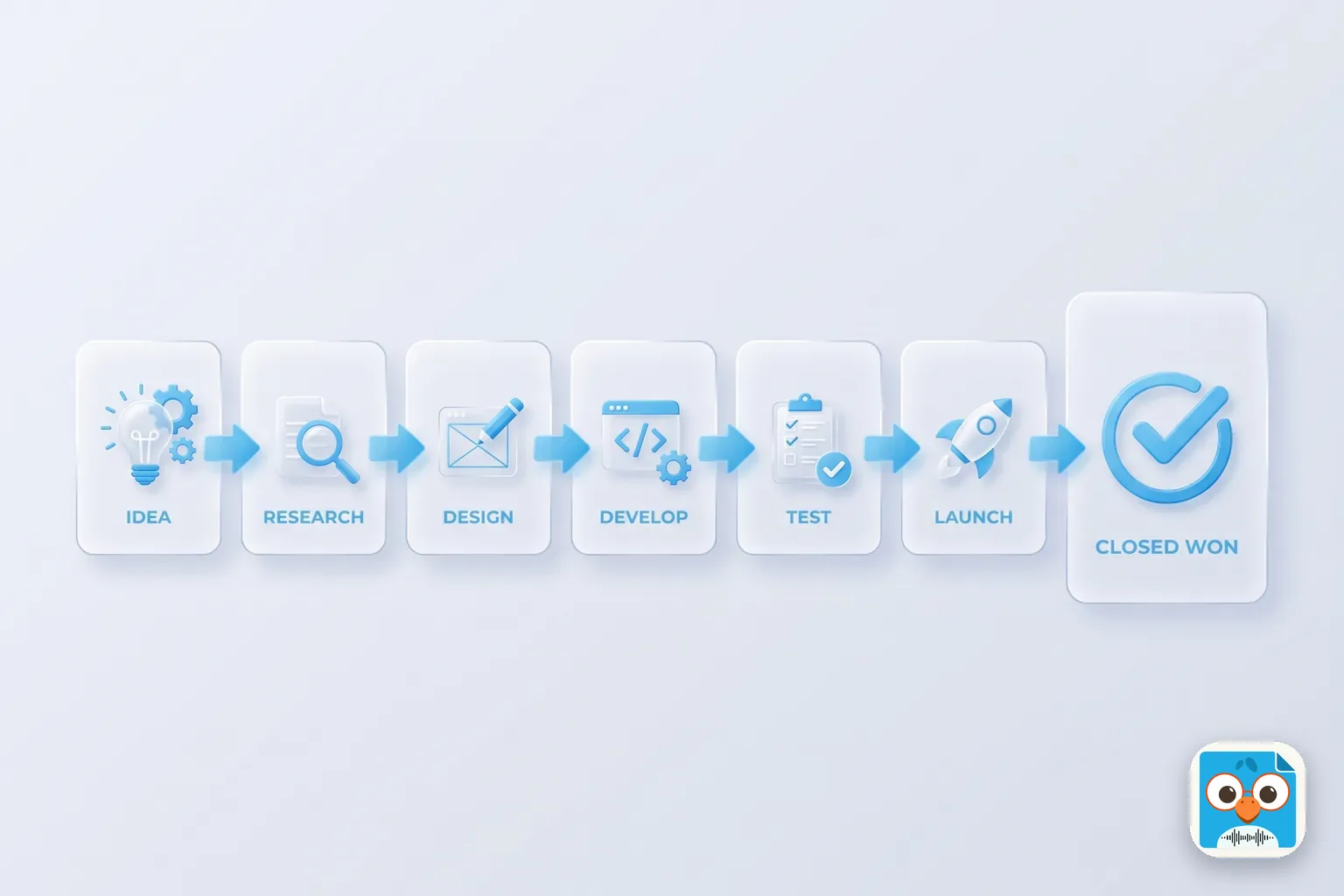
What Is a Sales Pipeline? Stages, Examples and Mistakes
What is a sales pipeline? Learn the seven stages with exit criteria, follow one field deal from prospect to close, and avoid the mistakes that inflate it.
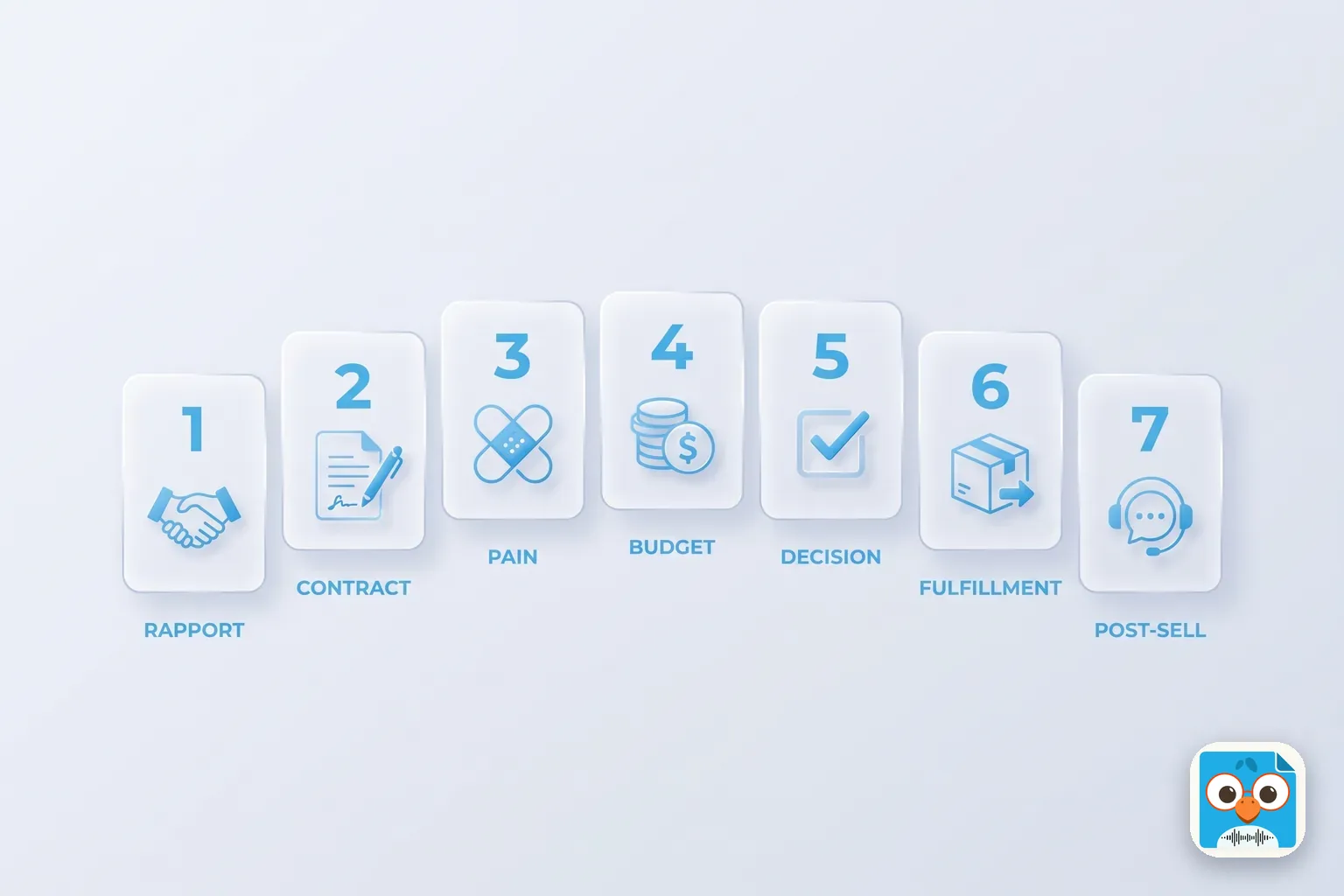
Sandler Sales Methodology: The Seven Steps Explained
The Sandler sales methodology in seven steps, from up-front contract to post-sell, with a one-page call sheet and a worked field call to copy. Try it free.