Typeless vs Wispr Flow: Which AI Dictation App Should You Use?
Sarah Johnson
Writes about field sales, meeting notes and voice-first workflows at ParrotNotes. Every article is reviewed by the ParrotNotes product team before it goes live.
Table of Contents
- 1.Typeless vs Wispr Flow: the short answer
- 2.Typeless vs Wispr Flow side by side
- 3.Typeless vs Wispr Flow pricing in November 2026
- 4.On your phone: Typeless vs Wispr Flow on iPhone and Android
- 5.On your computer: Mac, Windows and Linux
- 6.Cleanup, languages and accuracy
- 7.Privacy: where your voice goes
- 8.For teams, and for meetings
- 9.Which should you pick? Typeless or Wispr Flow by device and job
- 10.A 3-day test of both free plans
- 11.Typeless vs Wispr Flow: the verdict
Priya answers about 80 messages a day. Half are on her Android phone between client visits, the rest on a Windows laptop at night. She's narrowed her search to two AI voice keyboards and keeps reading the same claim on both home pages: "4x faster than typing." (Priya is a composite reader, not a real person.)
So which one should she install? Here's the short answer to Typeless vs Wispr Flow, as of November 2026:
- Pick Wispr Flow if you pay month to month, dictate long passages at a computer, or want snippets and a meeting notetaker. Pro is $15 a month, or $12 billed yearly.
- Pick Typeless if you'll pay yearly anyway, use Linux, or switch languages mid-sentence. Pro is $12 a month billed yearly, but $30 billed monthly.
- Either works on iPhone, Android, Mac and Windows, and both have a free plan with a weekly word limit that neither company puts a number on.
Every fact here comes from each company's own pricing, help and privacy pages, read on November 19, 2026. We didn't run a hands-on test, so you won't see accuracy scores of our own. ParrotNotes publishes this blog and sells neither app. Our app isn't a voice keyboard; it records conversations, and it appears near the end for readers who need that. If that's you, try ParrotNotes free and come back for the comparison.
Typeless vs Wispr Flow: the short answer
Both apps do the same job. You press a shortcut or tap a button and talk. Polished text then lands wherever your cursor is: Gmail, Slack, WhatsApp, a CRM note or a ChatGPT prompt. Both strip out "um" and "uh," fix it when you change your mind mid-sentence, and turn spoken lists into real lists.
So the decision comes down to five things:
- How you pay. On yearly billing they cost the same, $144 a year. Monthly, Typeless is twice the price.
- How long you talk. Typeless stops a dictation at 9 minutes. Wispr Flow allows 20 minutes on a computer, but only 5 on Android.
- How many languages you mix. Typeless says you can "mix them seamlessly." Wispr says it detects "one language per dictation, not per word."
- Which computer you use. Only Typeless runs on Linux.
- What else you need. Wispr adds snippets and a meeting notetaker. Typeless adds a $200 Ultra plan for "max accuracy."
Typeless vs Wispr Flow side by side
This table pulls from Typeless pricing, Wispr Flow pricing and both help centers, as of November 2026.
| Typeless | Wispr Flow | |
|---|---|---|
| What it is | AI voice keyboard | AI voice keyboard, plus Notetaker |
| Platforms for dictation | Mac, Windows, Linux, iPhone, Android | Mac, Windows, iPhone, Android |
| Free plan | "Limited words" each week | "Limited words per week" |
| Pro, billed yearly | $12 a month | $12 a month |
| Pro, billed monthly | $30 a month | $15 a month |
| Top individual tier | Ultra, $200 a month | Pro (Growth adds team admin) |
| Longest single dictation | 9 minutes | 20 minutes on desktop, 5 on Android |
| Languages | 100+, mixing allowed | 100+, one per dictation |
| Tone by app | Yes | Desktop and English only |
| Snippets (spoken shortcuts) | Not listed | Yes |
| Meeting notes | Not offered | Notetaker on Mac, Windows, iPhone |
| Works offline | No, cloud transcription | No, cloud transcription |
Two rows matter more than the rest for most people: the monthly price and the session length. A 9-minute cap is plenty for a message or an email. It's tight if you like to talk through a whole report in one go.
Typeless vs Wispr Flow pricing in November 2026
Here's what each plan costs per person, from the two pricing pages on November 19, 2026, in US dollars.
| Plan | Typeless | Wispr Flow |
|---|---|---|
| Free | $0, limited words | $0, limited words, limited Notetaker |
| Pro, monthly | $30 | $15 |
| Pro, yearly | $12 a month ($144 a year) | $12 a month ($144 a year) |
| Higher tier | Ultra, $200 a month | Growth, $18 a month in the comparison table |
| Enterprise | Custom | Custom, annual only |
| Students | 50% off Pro, desktop checkout only | 50% off Pro |
| Educators | Not listed | 40% off Pro |
What a year really costs. If you'd rather not commit, a year of monthly Pro is $360 on Typeless and $180 on Wispr Flow. Paid yearly, both are $144. That $216 gap on monthly billing is the biggest money difference between the two.
The free plans have no numbers. Older comparisons, including Typeless's own from August 2026, quote 8,000 free words a week for Typeless and 2,000 for Wispr Flow on desktop. Neither pricing page shows those numbers now. Wispr's help center says the allowance "differs by platform and account," so check the usage meter in each app instead of trusting a review.
Ultra is new. Typeless now lists an Ultra plan at $200 a month, promising "Max accuracy" and "Near-zero edits." Most readers can ignore it.
Wispr's Growth price is unclear. Its card shows $23 and $33 monthly, and $18 and $26 yearly, without saying which applies. Ask Wispr before you budget for a team.
On your phone: Typeless vs Wispr Flow on iPhone and Android
Most people searching this comparison will dictate on a phone at least half the time. Here's how each app works there, as of November 2026.
iPhone
Both apps install as a third-party keyboard that you switch to when you want to talk. Wispr's setup guide says its keyboard needs Full Access and "Wi-Fi or cellular data to transcribe." It also hands you back to the system keyboard in number, phone and email fields. Typeless needs iOS 16.1 or later, and its listing is iPhone only.
On phones, Typeless adds Speak to edit: select text, tap, and say how it should change. Wispr's pricing page now lists Notetaker on iPhone as well as on Mac and Windows, so you can capture a meeting on the phone with Wispr's free allowance.
If you want to try the free option first, Apple's built-in dictation is covered in our guide to the best dictation app for iPhone.
Android
On Android the two look alike at first. Each adds a floating bubble that sits next to the keyboard you already use, such as Gboard or Samsung Keyboard, and each needs Android's accessibility access to insert text. Wispr's Android setup guide also asks for permission to appear over other apps, and Wispr lists Android 13 or later.
The differences are in the limits. On Wispr Flow, a single dictation stops at 5 minutes on Android, and Android can't auto-detect your language, so you pick at least one. Notetaker isn't on Android yet; Wispr calls it "on the roadmap."
For Priya, who writes half her messages on an Android phone in short bursts between visits, neither 5 nor 9 minutes is a problem, and both bubbles need the same access. If she'd rather not grant accessibility access at all, free Gboard voice typing is built in and needs none.
On your computer: Mac, Windows and Linux
On a computer both apps sit in the background and wake up on a shortcut. Typeless uses the Fn key on a Mac and Right Alt on Windows, according to its help pages. On a Mac it also asks for Accessibility and Microphone permission, so it can paste into any app. Wispr Flow also works on a shortcut in any app.
The differences:
- Session length. Wispr Flow runs a dictation for up to 20 minutes on Mac and Windows. Typeless stops at 9 minutes, with a 60-second countdown from minute 8, and saves what you said to History.
- Linux. Typeless has a Linux app. Wispr Flow doesn't.
- Snippets. Wispr lets a spoken cue expand into saved text, like a booking link or a standard reply. Typeless doesn't list this.
- Ask about text. Typeless lets you select text on desktop and ask a question about it, or ask it to summarize or translate.
Marco writes long client updates at his Mac each Friday and likes to talk a whole update through in one take, often 12 minutes or more. Typeless would cut him off at 9; Wispr gives him 20. For him, session length decides it before price does. (Marco is a composite too.)
Need offline dictation on a Mac? See Superwhisper vs Wispr Flow. On a PC, free Windows 11 dictation is a fair baseline.
Cleanup, languages and accuracy
Both apps rewrite, not just transcribe. Here's what each lists on its own feature pages.
| Cleanup feature | Typeless | Wispr Flow |
|---|---|---|
| Filler words removed | Yes | Yes |
| Mid-sentence corrections | "Self-correction" | "Backtrack" |
| Spoken lists formatted | Yes | Yes |
| Personal dictionary | Yes, automatic and manual | Yes, learns from your fixes |
| Tone matched to the app | Yes | English and desktop only |
| Whispering | Whisper mode | Works when whispering |
| Translate as you speak | Yes | Not listed on features page |
Languages. Both list 100+ languages. The real difference is mixing. Typeless's home page says you can "speak in any language or mix them seamlessly." Wispr's language guide says Flow "detects one language per dictation, not per word," and recommends picking one language rather than auto-detect. If you switch between English and Hindi or Spanish in the same sentence, that's a reason to test Typeless first.
Who wrote the accuracy numbers you've seen?
Neither company publishes a word error rate. So where do the accuracy scores in other comparisons come from? We checked the pages that rank for this search on November 19, 2026.
| Page | Who publishes it | What it claims |
|---|---|---|
| typeless.com blog | Typeless | Accuracy difference "negligible," free word numbers no longer on either pricing page |
| voicedash.ai | VoiceDash, a rival dictation app | Wispr about 3.9% error; Typeless given as both about 7.9% and about 20% on the same page; no sample size |
| willowvoice.com, getvoibe.com, lumevoice.com, usevoicy.com | Each sells a rival dictation app | Mixed verdicts |
None of these is a neutral test. That doesn't make them wrong, but trust your own trial over any score. The one independent figure is general. In a study from Stanford, the University of Washington and Baidu, speech was 2.93 times faster than typing on a phone keyboard in English. Speaking is fast with either app; the time goes into fixing.
Privacy: where your voice goes
Here's the short version from each company's data controls page. Both send your voice to the cloud to be transcribed, and neither offers an offline mode.
| Typeless | Wispr Flow | |
|---|---|---|
| Where transcription runs | "Performed on the cloud" | "Always occurs on the cloud" |
| Audio kept? | Discarded once text is returned | Your choice, via Dictation Cloud Storage |
| Used to train models? | "Not used for model training" | A setting you control under Data and Privacy |
| History | On your device unless you turn on cloud sync | Local history, with a delete option |
| Third-party AI | Providers "such as Microsoft and Google" | Zero data retention agreements, with some Notetaker exceptions |
| Security claims | ISO 27001 certified and GDPR compliant, per its home page | SOC 2 Type II complete; ISO 27001 pending |
| Page last updated | October 13, 2026 | August 18, 2026 |
Sources: Typeless data controls, Wispr data controls and Wispr security.
The practical difference: Typeless's defaults are stricter out of the box, because it says training is off for everyone and audio isn't stored. With Wispr Flow, the strict settings are there, but you set them yourself on day one. Our Typeless review and Wispr Flow review quote each policy in more detail.
For teams, and for meetings
Teams. Both Pro plans include team billing and usage analytics. Wispr's Pro adds a shared dictionary and shared snippets, which helps a sales team spell product names the same way. Typeless puts single sign-on on Enterprise; Wispr puts it on Growth.
Meetings. Here the two split. Wispr sells Notetaker, which records meetings from your computer or iPhone without a bot. Typeless has no meeting feature. But a voice keyboard of either kind types what you say. It doesn't record the other people in the room.
That's the job ParrotNotes does, and it's a different one. Aisha sells medical supplies and spends her mornings in clinic offices talking to purchasing managers about orders and delivery dates. (Aisha is a composite.) After each visit she doesn't need a faster keyboard. She needs the 30-minute conversation itself, captured with the buyer's agreement and turned into a summary she can act on.
ParrotNotes isn't a system-wide keyboard and won't type into Slack for you. You open it on your iPhone or Android phone, tap record and put the phone down; it keeps recording with the screen locked. You get a transcript, an AI summary and action items, with no bot involved. Here's how AI meeting notes without a bot work.
What it costs, from parrotnotes.app/pricing as of November 2026:
- Free: 100 minutes of recording a month (up to 30 minutes per recording), an AI summary on every recording and 5 AI-powered recordings a month with action items.
- Pro: $19.99 a month, or $14.99 a month billed annually, with 3,000 minutes a month and recordings up to 3 hours. Apps for iPhone, Android and Mac come with every plan.
Plenty of people use both: a keyboard for replies, a recorder for conversations. If your day looks like Aisha's, download ParrotNotes free for the meetings and keep whichever keyboard you pick here.
Which should you pick? Typeless or Wispr Flow by device and job
Use the row that sounds most like you.
| If you... | Pick | Why |
|---|---|---|
| Pay monthly, not yearly | Wispr Flow | $15 against $30 |
| Pay yearly | Either | Both $144 a year |
| Use Linux | Typeless | Wispr has no Linux app |
| Talk for more than 9 minutes at a computer | Wispr Flow | 20-minute desktop sessions |
| Dictate long passages on Android | Typeless | Wispr stops at 5 minutes there |
| Mix two languages in one sentence | Typeless | Wispr detects one per dictation |
| Want to pick your language automatically on Android | Typeless | Wispr has no auto-detect on Android |
| Want snippets or shared team vocabulary | Wispr Flow | Snippets and shared dictionary |
| Want meetings captured on a computer | Wispr Flow | Notetaker |
| Want strict privacy defaults with no setup | Typeless | Training off and audio discarded by default |
| Need in-person conversations recorded on a phone | Neither | A recorder such as ParrotNotes |
Want more than two options? Our Wispr Flow alternatives guide and the best dictation app roundup go wider.
A 3-day test of both free plans
You can settle Typeless vs Wispr Flow in three days, since both free plans need no payment. Install both on the device you use most, and run each test in each app.
- Day 1, names. Add 10 client or product names to each dictionary, then dictate two messages that use them. Count the misspellings.
- Day 2, corrections. Dictate a 150-word email with two figures and a date, and change one figure mid-sentence. Only the corrected figure should appear.
- Day 3, your real day. Use only voice for replies in your three most-used apps. Note any app where the keyboard or bubble won't insert text, and check each word meter at the end.
The app with fewer fixes on your voice wins. If they tie, let price and session length decide. Before testing, you can also try talking instead of typing in a browser with our free online dictation tool.
Typeless vs Wispr Flow: the verdict
Typeless vs Wispr Flow is closer than most comparisons admit, because a rival app wrote most of them. Here's what the two companies' own pages say, as of November 2026:
- Same yearly price, $144, with no published free word limit on either.
- Wispr Flow wins on monthly price, desktop session length, snippets and meetings.
- Typeless wins on Linux, mixed languages, longer Android dictations and privacy defaults.
- Neither works offline, and neither publishes an accuracy figure.
So run the 3-day test on the device you use most, then pay yearly for the winner if you'll keep it. Priya, with her short Android bursts and no Linux, could go either way; her test decides. And if what you really need is the conversation itself, recorded on your phone and handed back as a summary, try ParrotNotes free at your next meeting.
Frequently Asked Questions
Is Typeless better than Wispr Flow?
Neither is better for everyone. Wispr Flow is cheaper month to month ($15 against $30), allows 20-minute dictations on a computer and adds snippets and a meeting notetaker. Typeless runs on Linux, says it handles mixed languages and has stricter privacy defaults. On yearly billing both cost $12 a month, as of November 2026.
Is Typeless free?
Yes. Typeless has a free plan with a weekly word limit that its pricing page doesn't put a number on. It includes translate, the personal dictionary, tones for each app and 100+ languages. Pro removes the limit for $12 a month billed yearly or $30 monthly.
Which works better on Android, Typeless or Wispr Flow?
Both add a floating bubble next to your existing keyboard and need accessibility access. Typeless dictations run up to 9 minutes; on Wispr Flow a dictation stops at 5 minutes and you have to pick your language. Try both free plans on your own phone.
Do Typeless and Wispr Flow work offline?
No. Both companies say transcription happens in the cloud, so you need Wi-Fi or mobile data to dictate.
Can Typeless or Wispr Flow record meetings?
Typeless can't. Wispr Flow has a separate Notetaker for meetings on Mac, Windows and iPhone. To record in-person conversations on an iPhone or Android phone and get a summary, a recorder app such as ParrotNotes fits better; its free plan includes 100 minutes a month.
Related Posts
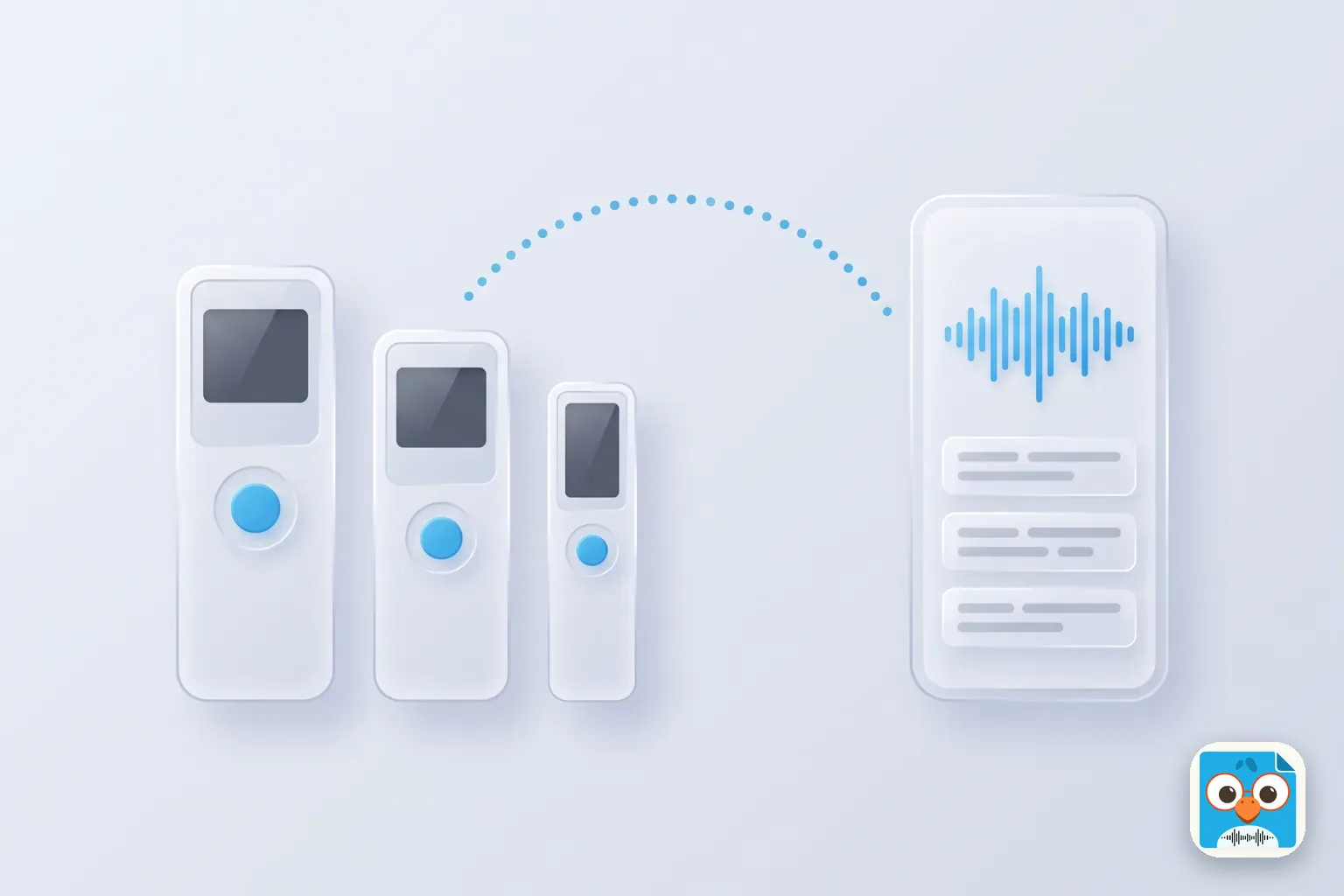
Sony Voice Recorder: Which Model to Buy, and When a Phone App Is Enough
Sony voice recorder guide: PX470, UX570 and TX660 compared from Sony's own specs, which one to buy, and when a free phone app that transcribes is enough.
Otter AI Chrome Extension: How It Works, What It Records and the Limits
How the Otter AI Chrome extension works in Google Meet and Zoom, what it records, which plans include it and where it stops. Steps checked November 2026.
Noty AI Review: What the Meeting Note Taker Does and What It Costs
Noty AI review, checked Nov 2026: the Chrome extension for Google Meet and Zoom with no bot, Pro at $10 a month, and its limits. Try ParrotNotes free.